Sonodrill, pour s'exercer avec de l'audio
English version below.
J'ai publié une petite application pour iPhone et iPad : Sonodrill. Elle sert à travailler un morceau, un solo ou un cours enregistré : on pose des repères au début des sections, puis on boucle, on saute et on ralentit exactement les passages qu'on travaille.
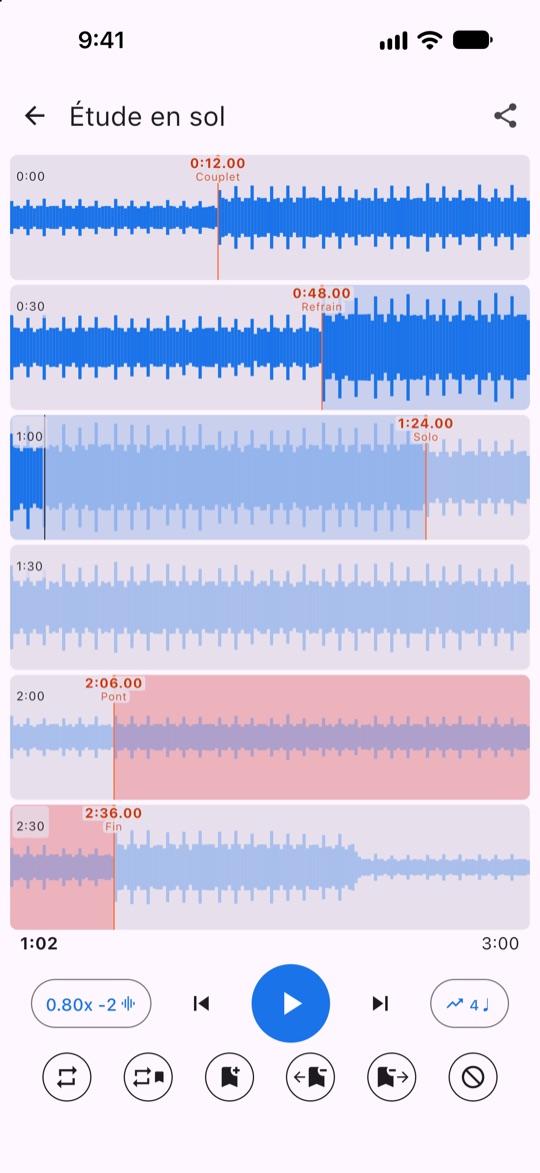
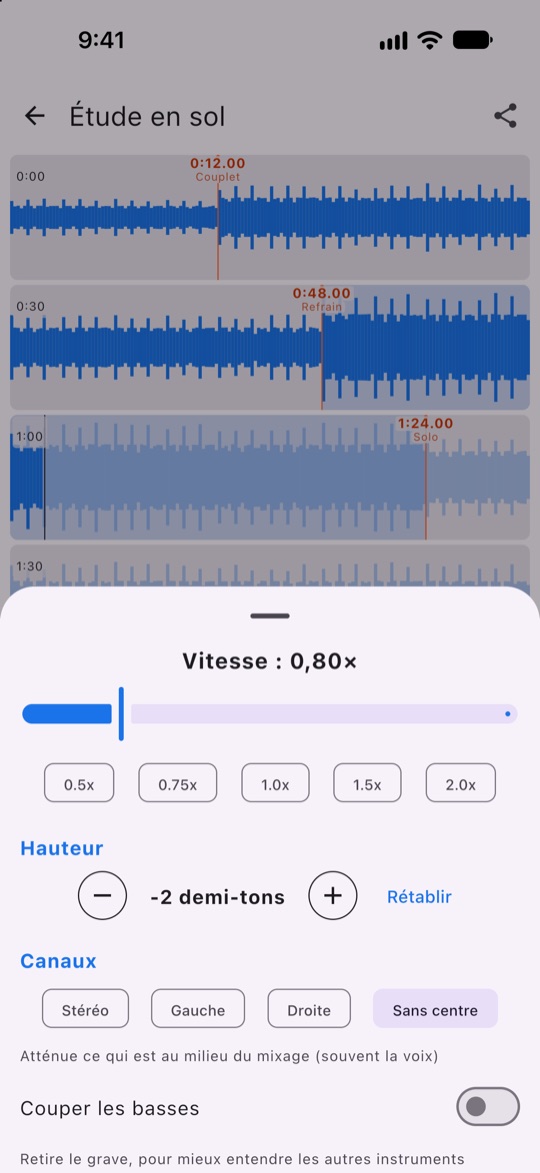
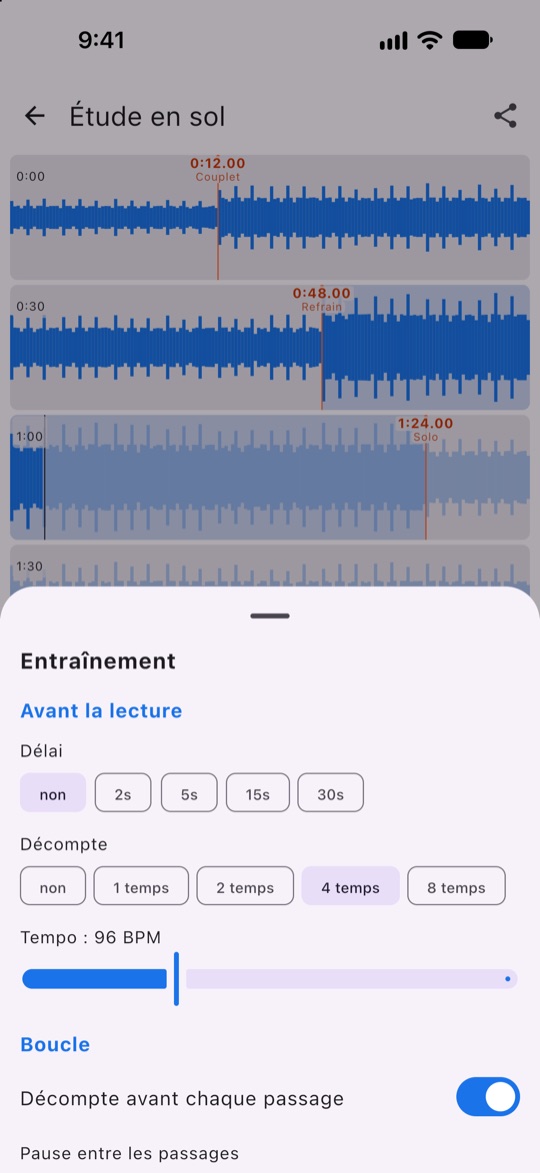
Au-delà des boucles et de la vitesse (de 0,5× à 2× sans changer la hauteur), elle sait transposer par demi-tons, isoler un canal ou atténuer le centre du mixage — souvent la voix —, et elle a un mode d'entraînement : décompte au métronome, pause entre les passages, nombre de répétitions, et vitesse progressive qui monte un peu à chaque passage jusqu'au tempo visé.
Les repères se partagent dans un petit fichier .sonodrill, à envoyer à un professeur ou à un
musicien, et se synchronisent entre ses propres appareils par iCloud. Il
n'y a ni compte, ni publicité, ni pistage : l'application ne collecte
rien.
- Sonodrill sur l'App Store, gratuite.
- Le code : git.schurger.org/sonodrill. Elle est écrite en Kotlin Multiplatform avec Compose ; le traitement du son (filtres, transposition, clics du métronome) est commun à iOS et Android, et une version Android suivra peut-être.
English version
I published a small app for iPhone and iPad: Sonodrill. It helps you work on a song, a solo or a recorded lesson: place marks where the sections start, then loop, skip and slow down exactly the parts you are working on.
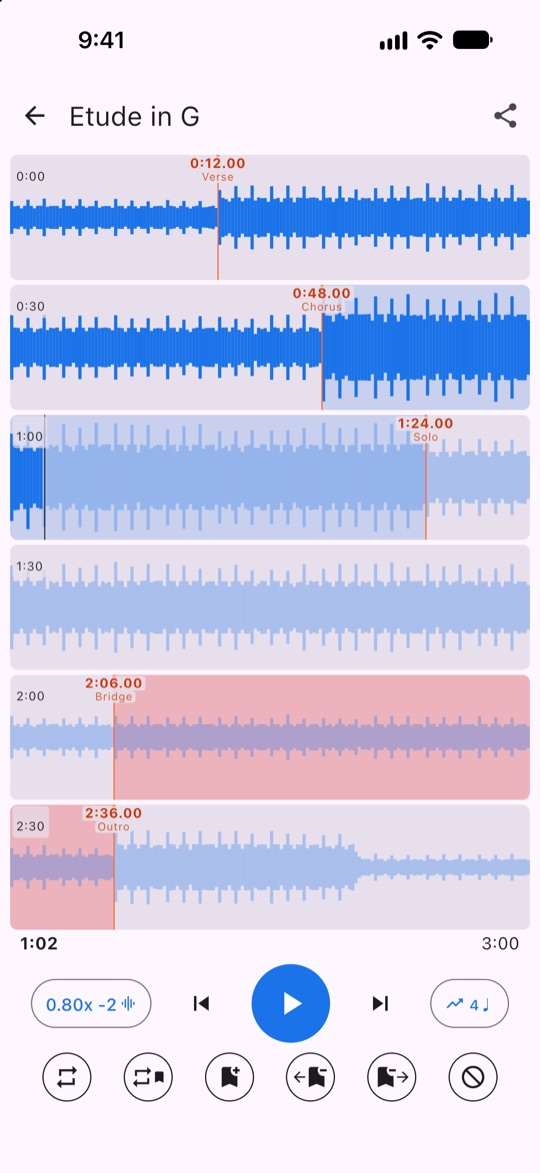
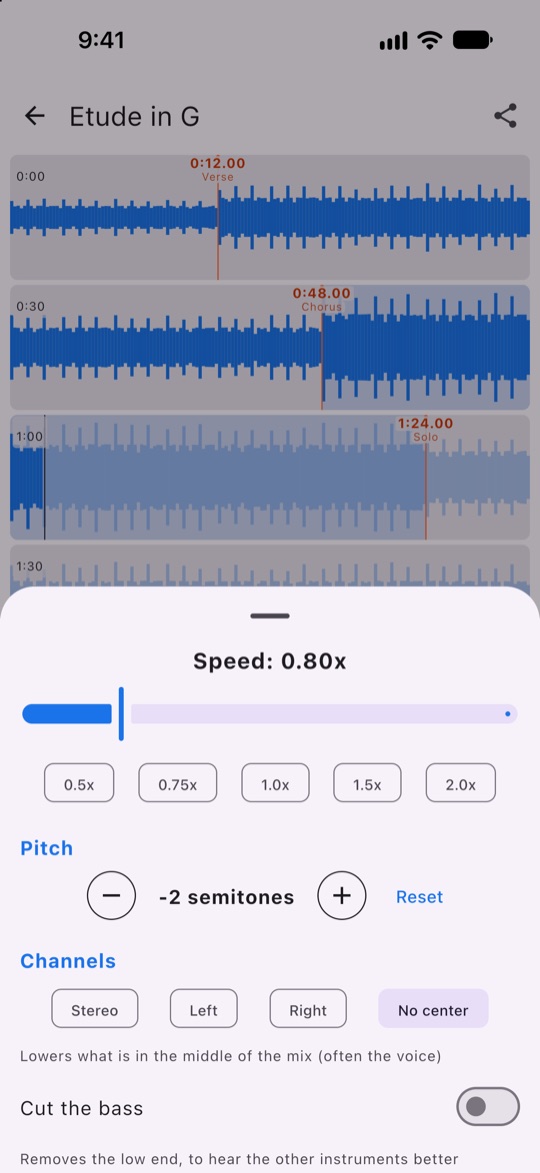
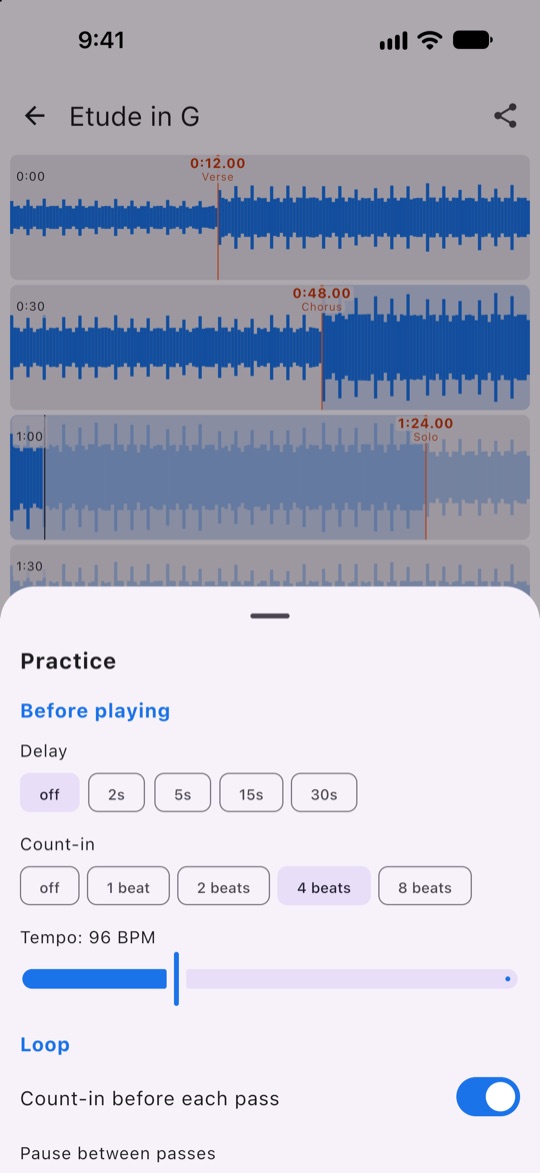
Beyond loops and speed (0.5× to 2× without changing the pitch), it can transpose by semitones, isolate a channel or lower the center of the mix — often the voice —, and it has a practice mode: metronome count-in, pause between passes, number of repetitions, and a progressive speed that goes up a little at each pass until the target tempo.
Marks can be shared in a small .sonodrill file, to send to a teacher or a
bandmate, and they sync between your own devices through iCloud. No
account, no ads, no tracking: the app collects nothing.
- Sonodrill on the App Store, free.
- The code: git.schurger.org/sonodrill. It is written in Kotlin Multiplatform with Compose; the sound processing (filters, transposition, metronome clicks) is shared between iOS and Android, and an Android version may follow.